Mohs Surgery, Step by Step

Mohs surgery combines precise surgical removal with immediate microscopic examination to treat skin cancer while preserving as much healthy tissue as possible.

At Advanced Dermatology & Skin Cancer Center, Fellowship-trained Mohs Surgeon Dr. Lance Henry personally performs each stage of surgery, examines the tissue, and plans reconstruction once the cancer has been completely removed.

What Happens During Mohs Surgery?

The visible portion of a skin cancer does not always reveal how far the cancer extends beneath the skin. Mohs surgery addresses these hidden roots by removing tissue in carefully mapped layers and examining the complete surgical margins during the procedure.

If cancer cells remain, Dr. Henry can identify their exact location and remove additional tissue only from that area. The process continues until no cancer cells are detected.

This precise approach helps provide the highest cure rates for many skin cancers while preserving as much healthy tissue as possible.

What Happens During Mohs Surgery

What to Expect During Mohs Surgery

Mohs surgery is performed in carefully planned stages, allowing Dr. Henry to remove the skin cancer while preserving as much healthy tissue as possible. Between each stage, the tissue is examined under a microscope to determine whether any cancer cells remain. This meticulous process continues until the cancer has been completely removed.

While every procedure is unique, most patients can expect the following steps:

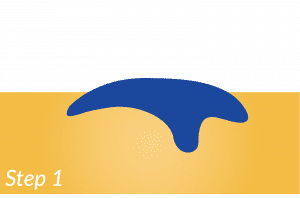
Mohs Surgery step one

Step 1: Evaluation & Preparation

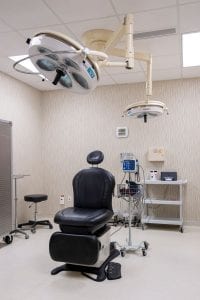
Dr. Henry begins by examining the biopsy site, reviewing your diagnosis, and planning the area to be treated. The skin is cleansed, and local anesthetic is administered to numb the surgical area.

You remain awake throughout the procedure and should not feel pain in the treated area. Additional anesthetic may be provided as needed to help keep you comfortable.

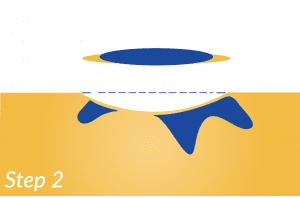
Mohs Surgery step two

Step 2: Remove the Visible Skin Cancer

Dr. Henry carefully removes the visible portion of the skin cancer along with a thin layer of surrounding tissue.

The goal is to obtain the tissue needed for complete microscopic evaluation without unnecessarily removing healthy skin.

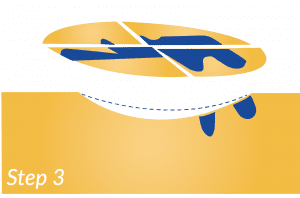
Mohs Surgery step three

Step 3: Tissue Mapping & Laboratory Processing

The removed tissue is carefully divided, marked, and mapped so Dr. Henry knows exactly where each section originated on the surgical site.

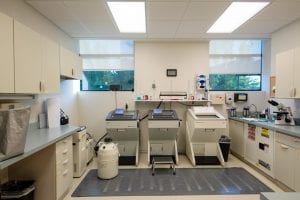
The tissue is then processed in the Mohs laboratory and prepared on microscope slides. This detailed map allows any remaining cancer cells to be traced back to their precise location.

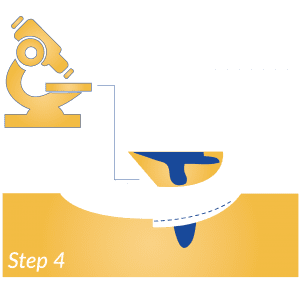
Mohs Surgery step four

Step 4: Microscopic Examination

Dr. Henry personally examines the undersurface and outer edges of the tissue under a microscope, looking for any remaining cancer cells.

Mohs surgery evaluates the complete surgical margins during the procedure. This allows Dr. Henry to determine whether the cancer has been fully removed before reconstruction begins.

While the tissue is being processed and examined, you will wait comfortably in a designated area.

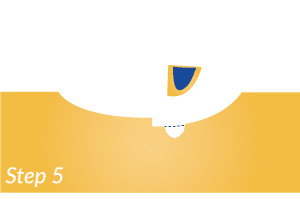
Mohs Surgery step five

Step 5: Targeted Removal, If Needed

If cancer cells remain, Dr. Henry marks their location on the surgical map and removes another thin layer of tissue only from the area where cancer is still present.

Healthy tissue that has already been confirmed to be cancer-free is left undisturbed.

The mapping, processing, and microscopic examination steps are repeated until no cancer cells remain.

Mohs Surgery step six

Step 6: Reconstruction & Recovery

Once the surgical site is completely cancer-free, Dr. Henry evaluates the wound and discusses the most appropriate repair.

Depending on the size, depth, and location of the surgical site, reconstruction may include:

  • Allowing the wound to heal naturally
  • Closing the area with stitches
  • Repositioning nearby skin with a flap
  • Using a skin graft
  • Coordinating additional reconstructive care when necessary

Many repairs are completed the same day. Dr. Henry plans each reconstruction to support healing while preserving function and appearance as much as possible.

Before you leave, our team will apply a dressing, review wound-care instructions, and explain any activity restrictions or follow-up appointments.

Why Mohs Surgery Is Different

Complete Margin Evaluation

Mohs surgery examines the complete outer edge and undersurface of the removed tissue during the procedure, helping identify cancer cells that may extend beyond what is visible.

Precise Tissue Mapping

Every section of tissue is carefully mapped, allowing Dr. Henry to return to the exact location where cancer remains.

Healthy Tissue Preservation

Additional tissue is removed only where cancer cells are detected, preserving healthy skin whenever possible.

Cancer Removal Before Reconstruction

The surgical site is repaired only after Dr. Henry has confirmed that no cancer cells remain in the examined margins.

How Long Does Mohs Surgery Take?

Every skin cancer is different, so it is not possible to predict how many stages will be required. Some cancers are cleared after the first stage, while others require additional tissue removal and microscopic examination.

Because each laboratory stage takes time to process and evaluate, patients should plan to spend several hours with us on the day of surgery.

We recommend:

  • Eating breakfast unless instructed otherwise
  • Wearing comfortable clothing
  • Bringing a book, tablet, or another quiet activity
  • Bringing snacks or drinks as permitted
  • Keeping the remainder of your day free


Your surgical team will provide instructions specific to your appointment.

Reconstruction After Mohs Surgery

Removing the skin cancer is the first priority. Once the cancer has been completely cleared, attention turns to repairing the surgical site.

Dr. Henry has advanced training in reconstructive dermatologic surgery and carefully selects the repair technique based on the location, size, depth, and shape of the wound. The goal is to promote healing while preserving movement, function, and appearance.

Some wounds can be closed with a simple line of stitches, while others may require a flap or graft. In certain cases, allowing the area to heal naturally may provide the best result.

Each reconstruction is personalized to the patient and the surgical site.

Reconstruction After Mohs Surgery Advanced Dermatology & Skin Cancer Center

After Your Procedure

Before leaving, you will receive detailed written instructions explaining how to care for the surgical site. These instructions may include:

  • How long to keep the initial dressing in place
  • How and when to clean the area
  • Applying ointment and a fresh bandage
  • Managing swelling or discomfort
  • Activities to avoid while healing
  • When stitches will be removed, if applicable
  • Signs that should prompt a call to our office


Following your instructions closely can support healing and help reduce the risk of complications.

Your Mohs Surgery Team

Mohs surgery requires coordination among the surgeon, nursing team, laboratory technicians, and support staff.

As a Fellowship-trained Mohs surgeon, Dr. Henry serves as both the surgeon who removes the cancer and the physician who examines the tissue under the microscope. This allows surgical findings and microscopic results to remain connected throughout the procedure.

Our team is here to keep you informed, comfortable, and supported throughout each stage of your visit.

Know What to Expect at Every Step

Our experienced Mohs surgery team will guide you through preparation, cancer removal, microscopic examination, reconstruction, and recovery.

Related Mohs Surgery Resources

Learn who may benefit from Mohs surgery, its advantages, and why patients choose Advanced Dermatology.

Learn About Mohs Surgery →

Learn about the advanced training completed by Fellowship-trained Mohs surgeons and why it matters in skin cancer care.

Explore the Fellowship-Trained Difference →

Review medication guidance, what to wear, what to bring, and how to prepare for your appointment.

Prepare for Surgery →

Understand the warning signs, diagnosis, and treatment of the most common form of skin cancer.

Learn About Basal Cell Carcinoma →

Learn how squamous cell carcinoma develops, how it may appear, and when Mohs surgery may be recommended.

Learn About Squamous Cell Carcinoma →

From skin biopsies and surgical excisions to Fellowship-trained Mohs surgery, explore the treatment options available for skin cancer and what to expect at every stage of care.

View Skin Cancer Treatments →

Why Patients Choose Us

Experienced Dermatology Providers

Expert care across medical, surgical, and cosmetic dermatology.

20,000+ Mohs Surgeries Performed

Extensive surgical experience supporting precise, effective treatment of skin cancer.

Fellowship-Trained Mohs Surgery

A level of training not all surgeons have, ensuring advanced care.

Integrated Skin Cancer Surgery Centers

Dedicated facilities in Fayetteville and Rogers offering complete care under one roof.

Mohs Surgery in Fayetteville, Arkansas

Advanced Dermatology & Skin Cancer Center, PLLC provides Fellowship-trained Mohs surgery at our Fayetteville location for patients from throughout Northwest Arkansas and surrounding communities.

Dr. Lance Henry is a double board-certified dermatologist and Micrographic Dermatologic Surgeon who has performed more than 20,000 Mohs surgeries. His advanced training encompasses skin cancer removal, microscopic tissue interpretation, and reconstruction following Mohs surgery.

Our comprehensive skin cancer program brings together dermatologic evaluation, biopsy, in-house pathology, Mohs surgery, reconstruction, and follow-up care within one coordinated practice. This continuity helps patients move from diagnosis through treatment with an experienced team familiar with their care.

Patients travel to our Fayetteville surgery center from Rogers, Bentonville, Springdale, Siloam Springs, Bella Vista, Harrison, and communities throughout Northwest and North Central Arkansas.

Mohs Surgery Advanced Dermatology & Skin Cancer Center Fayetteville

Our Locations

Advanced Dermatology & Skin Cancer Center, PLLC proudly serves patients throughout Northwest Arkansas with convenient locations including:

Advanced Dermatology & Skin Cancer Center, PLLC Fayetteville

Monday – Friday, 8 am – 5 pm

Advanced Dermatology & Skin Cancer Center, PLLC Rogers

Monday – Friday, 8 am – 5 pm

Advanced Dermatology & Skin Cancer Center, PLLC Bentonville 

Wednesday - Thursday 8 am – 5 pm

Advanced Dermatology & Skin Cancer Center, PLLC Harrison

Monday – Thursday, 8 am – 5 pm