Receiving a skin cancer diagnosis can feel overwhelming, but you don't have to navigate it alone. At Advanced Dermatology & Skin Cancer Center, PLLC, we provide comprehensive skin cancer treatment tailored to your diagnosis, the location of the cancer, and your individual needs.
From in-office procedures and surgical excisions to Fellowship-trained Mohs surgery, our experienced dermatology team offers advanced care focused on achieving the best possible outcomes while preserving your health and quality of life.
No two skin cancers are exactly alike. Your treatment plan will depend on several factors, including:
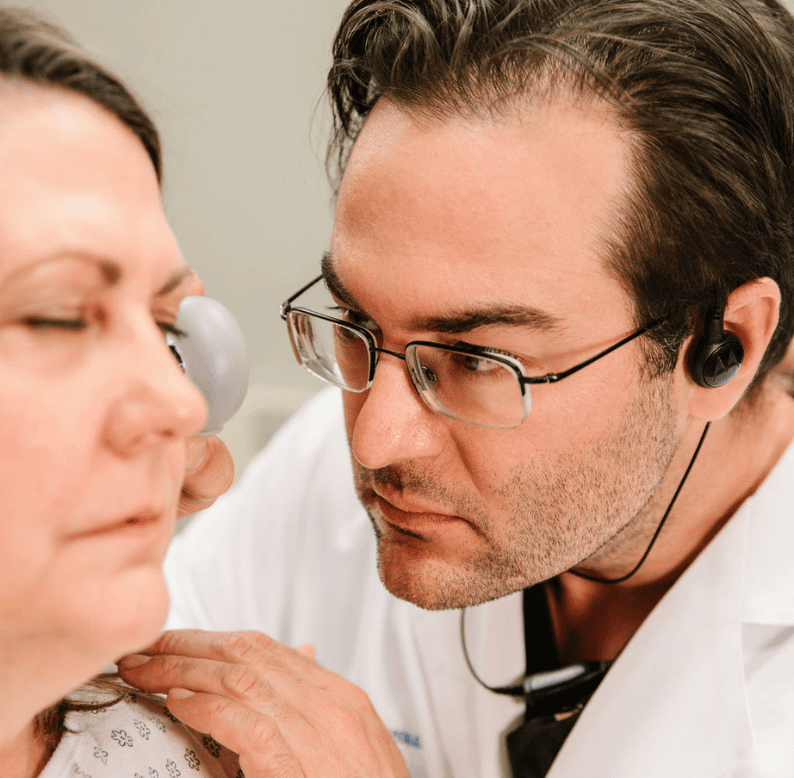
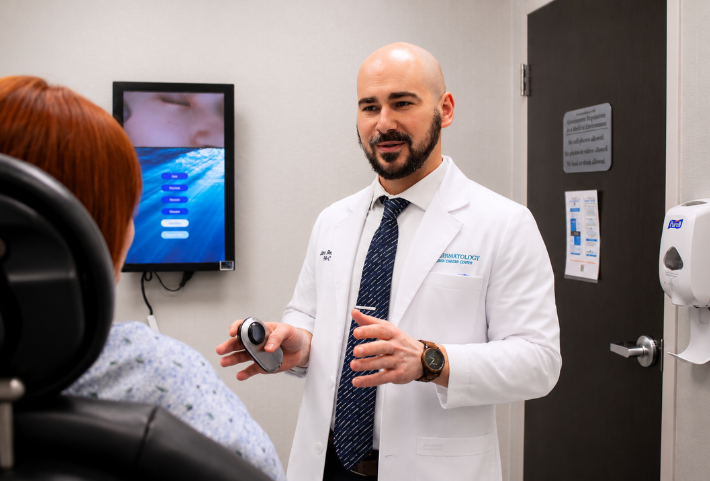
Our providers will explain your diagnosis, discuss all appropriate treatment options, and answer your questions so you can make informed decisions about your care.
Depending on your diagnosis, treatment may include one or more of the following.
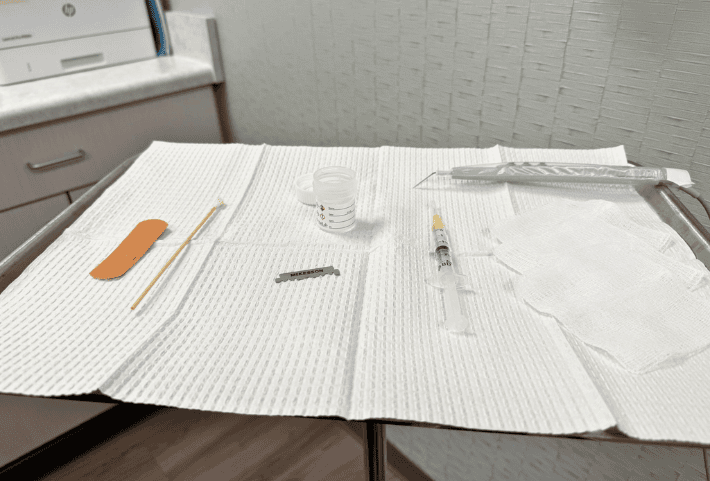
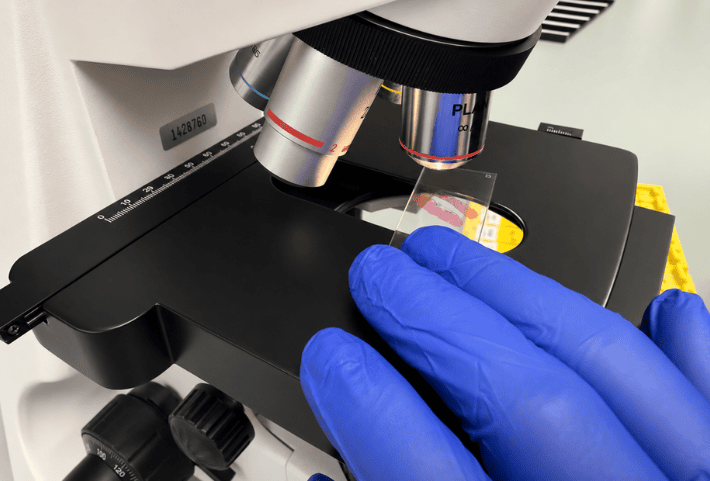
A skin biopsy is often the first step in confirming a skin cancer diagnosis. After numbing the area, your provider removes a small sample of tissue for examination by a pathologist.
A biopsy helps determine:
Many skin cancers can be successfully treated by surgically removing the lesion along with a margin of healthy tissue.
Surgical excision is commonly recommended for:
The removed tissue is examined to help ensure the cancer has been completely removed.
For many basal cell carcinomas and squamous cell carcinomas—particularly those on the face, ears, nose, lips, scalp, hands, and other cosmetically or functionally important areas—Mohs surgery offers the highest cure rates while preserving as much healthy tissue as possible.
During Mohs surgery:
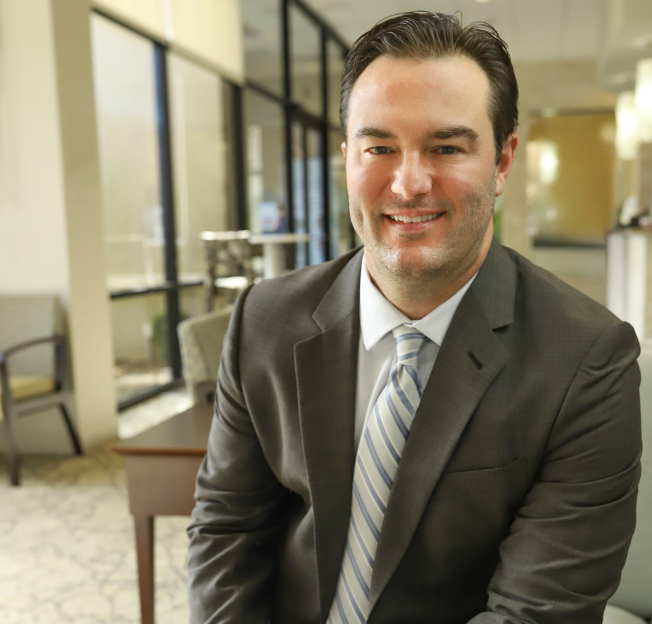
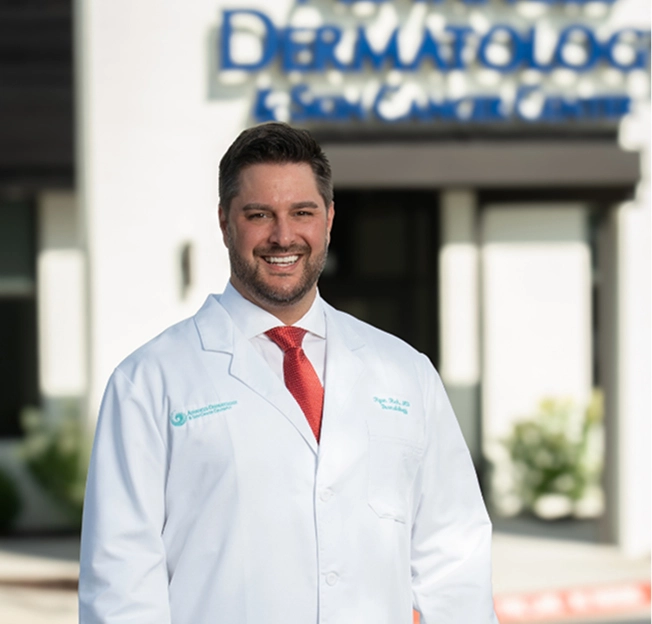
Dr. Lance Henry is a double board-certified dermatologist and Fellowship-trained Mohs surgeon with experience treating more than 20,000 skin cancers.
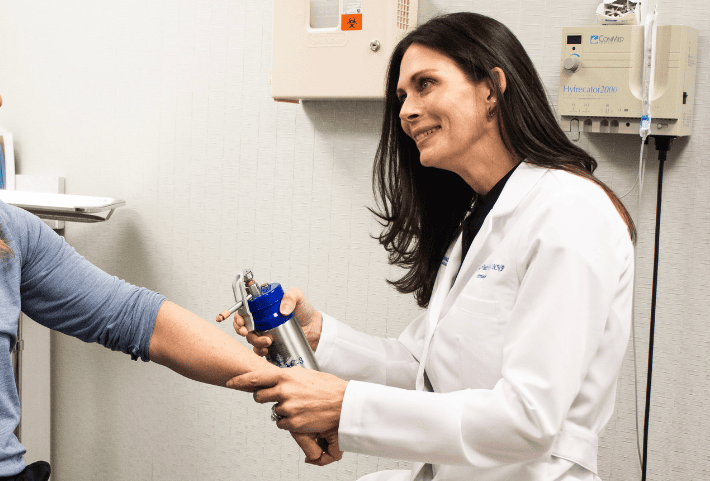
Some precancerous lesions, including many actinic keratoses, can be treated with liquid nitrogen.
Cryotherapy destroys abnormal cells while allowing healthy skin to heal naturally and is often completed in just a few minutes.
Certain superficial skin cancers and precancerous lesions may be treated with prescription creams that stimulate the immune system or destroy abnormal cells.
Your provider will determine whether this option is appropriate based on your diagnosis.
Treatment doesn’t always end after your procedure.
Patients with a history of skin cancer often benefit from:
Regular follow-up helps detect future skin cancers as early as possible.
Removing skin cancer is only one part of treatment.
When appropriate, reconstruction is performed to restore both function and appearance while promoting optimal healing.
Depending on the location and size of the surgical site, reconstruction may include:
Every reconstruction is individualized based on your specific needs.
Treating skin cancer early often means:
That’s why routine skin cancer screenings remain one of the most important steps in protecting your health.
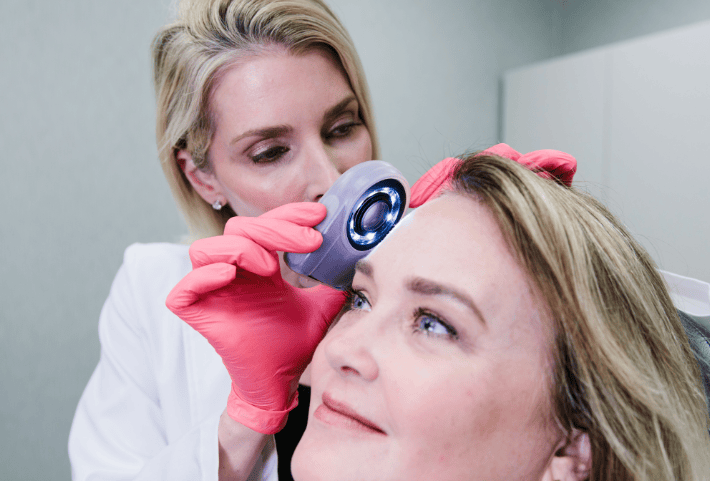
One of the advantages of choosing Advanced Dermatology & Skin Cancer Center is access to comprehensive care under one roof.
From your first skin exam through recovery, our experienced team is here to provide seamless, compassionate care every step of the way.
Treatment depends on the type of skin cancer, its location, size, depth, and other individual factors. Your provider will recommend the approach that offers the best outcome for your specific diagnosis.
No. Mohs surgery is most commonly used for many basal cell carcinomas and squamous cell carcinomas in areas where preserving healthy tissue is especially important. Other skin cancers may be treated with surgical excision, topical medications, cryotherapy, or other approaches.
Any procedure involving the skin may leave a scar. Our providers use techniques designed to achieve the best possible cosmetic and functional result while completely treating the cancer.
Your provider will recommend an appropriate follow-up schedule, including routine skin cancer screenings and ongoing monitoring for new or recurrent skin cancers.
Some skin cancers can recur, and patients who have had one skin cancer have an increased risk of developing another. Regular follow-up and sun protection remain important.
A professional skin cancer screening helps detect suspicious moles and skin changes early. Learn what to expect during a full-body skin exam and when you should be screened.
Reduce your risk with practical sun protection strategies, early detection tips, and skin cancer prevention guidance.
Understand the differences between basal cell carcinoma, squamous cell carcinoma, melanoma, and actinic keratosis.
Learn who may benefit from Mohs surgery, its advantages, and why patients choose Advanced Dermatology.
Learn about the advanced training completed by Fellowship-trained Mohs surgeons and why it matters in skin cancer care.
Discover how reconstruction following Mohs surgery is personalized to preserve function, restore appearance, and achieve the best possible cosmetic outcome after skin cancer removal.
Expert care across medical, surgical, and cosmetic dermatology.
Extensive surgical experience supporting precise, effective treatment of skin cancer.
A level of training not all surgeons have, ensuring advanced care.
Dedicated facilities in Fayetteville and Rogers offering complete care under one roof.
Advanced Dermatology & Skin Cancer Center, PLLC provides comprehensive skin cancer treatment for patients throughout Northwest Arkansas. Our experienced dermatology providers diagnose and treat basal cell carcinoma, squamous cell carcinoma, melanoma, and precancerous lesions using advanced techniques tailored to each patient’s needs. From skin biopsies and in-house pathology to surgical excision, Fellowship-trained Mohs surgery, and reconstruction, we provide seamless care from diagnosis through recovery.
Advanced Dermatology & Skin Cancer Center, PLLC proudly serves patients throughout Northwest Arkansas with convenient locations including:
Monday – Friday, 8 am – 5 pm
Wednesday - Thursday 8 am – 5 pm
Monday – Thursday, 8 am – 5 pm